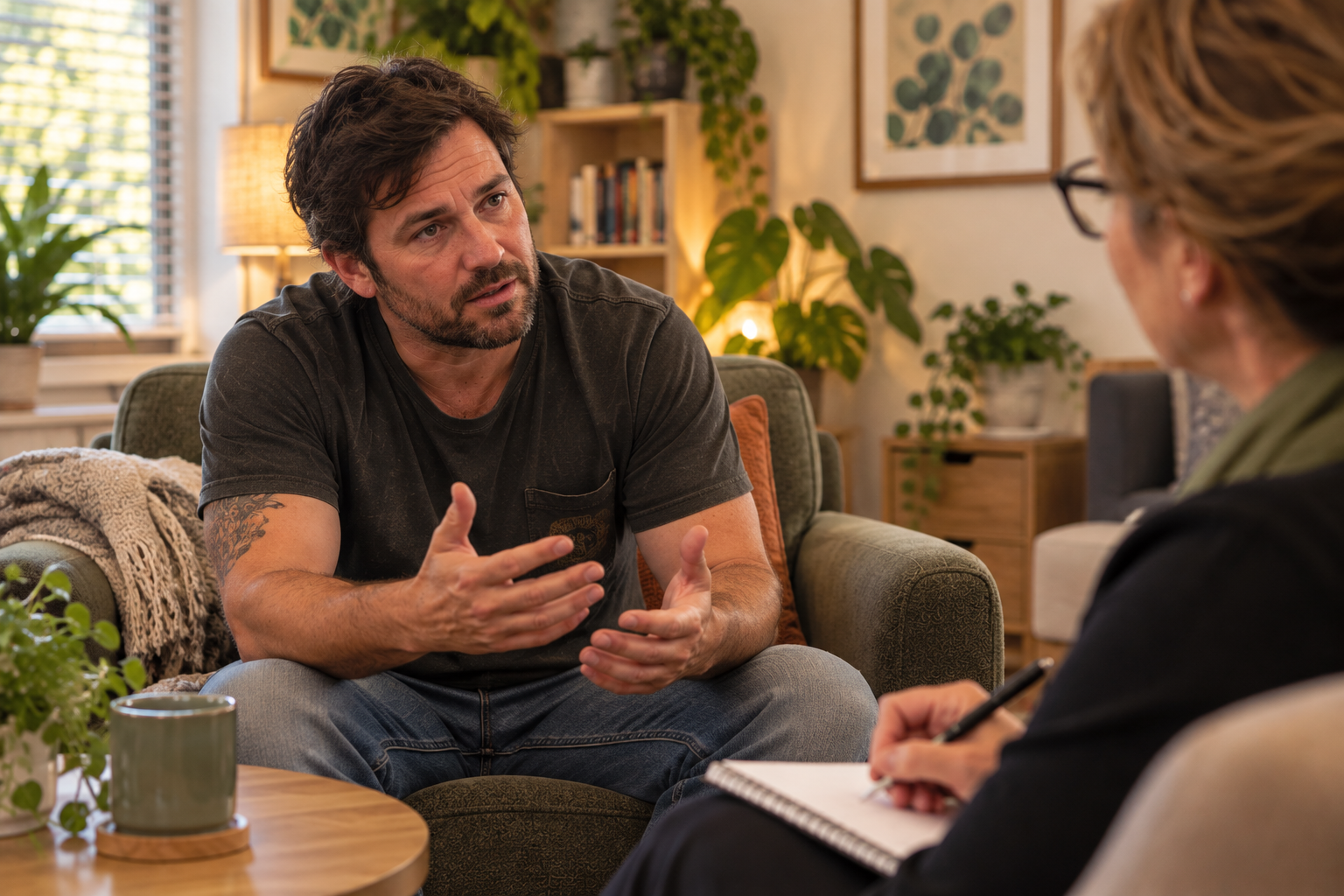
There is always more to the story.
Alcohol and other drug use rarely exists in isolation. Sometimes it begins socially. Sometimes it becomes a way of coping with stress, difficult experiences, relationships, emotions or simply getting through.
Over time, something that once seemed manageable can begin affecting other parts of life.
You don’t need to arrive with a label, have everything figured out, or even be certain about what you want to change.
We can start with where you are.
A Space to Understand
You might be wondering about your relationship with alcohol or other drugs. You may already know that something needs to change. Perhaps you’ve been through treatment before, are rebuilding after a setback, or simply want to understand why certain patterns keep returning.
Counselling offers somewhere to talk openly about what is happening without being reduced to your substance use or defined by the choices you have made.
At the heart of my approach is the same principle that guides all of my work:
Curiosity Without Judgement.
Understanding what has shaped a pattern does not mean excusing its consequences.
It gives us somewhere meaningful to begin.
My Approach to AOD Recovery
My approach is collaborative, trauma informed and grounded in respect for your autonomy.
Rather than beginning with “What is wrong with you?”, I’m interested in understanding what has happened, what the substance may have been doing for you, what it is costing you now, and what you would like life to look like from here.
I draw particularly on:
- Motivational Interviewing (MI) to explore uncertainty and strengthen your own reasons for change
- Acceptance and Commitment Therapy (ACT) to explore values and build a life around what matters to you
- DBT informed skills for managing distress, emotions, urges and relationships
- Mindfulness and grounding to build awareness and develop different ways of responding to difficult internal experiences
- Trauma informed practice that considers the experiences and circumstances surrounding substance use, not simply the behaviour itself
The work is not about telling you what you should do. It is about helping you understand your choices, recognise possibilities and decide what you want your next steps to be.
Beyond Stopping
Recovery can involve much more than whether someone is drinking or using.
For some people, reducing or stopping substance use is only the beginning. There may still be relationships to repair, emotions to understand, routines to rebuild, grief to process, boundaries to establish and questions about identity and purpose that emerge once life becomes quieter.
Counselling can provide space for that part of recovery too.
Recovery isn’t simply about leaving something behind. It can also be about discovering what you want to move towards.
Supporting Someone You Love
Alcohol and other drug use rarely affects only one person.
If someone you care about is struggling with substance use, you may find yourself moving between hope, frustration, fear, anger, compassion and exhaustion.
You might also be wondering where support ends and enabling begins, how to set boundaries without abandoning someone, or how to care about them while also caring for yourself.
You can come to counselling even if the person you are concerned about isn’t ready for help.
The focus can simply begin with you: what you are experiencing, what is within your control and what you need in order to protect your own wellbeing.
A Little More About AOD Counselling
Do I need to identify as having an addiction?
No. You might simply be questioning your relationship with alcohol or another drug and wanting somewhere confidential to explore it. You don’t need a diagnosis or label to come to counselling.
What if I’m not sure I want to stop?
That’s okay. Ambivalence is a very normal part of change. Counselling can give you space to explore what you enjoy about using, what concerns you, what might be changing and what you want for yourself without being pressured into a particular decision.
Do I have to be abstinent to attend counselling?
No. You do not need to have achieved abstinence before seeking support. We can talk about your goals and what recovery or change might look like for you.
What if I’ve already been through rehabilitation?
Counselling can continue well beyond formal treatment. Life after rehabilitation can bring its own challenges, including relationships, identity, routines, triggers, setbacks and figuring out what you want your life to become.
What if I’ve returned to using?
A lapse or return to use does not have to erase everything you have learned or achieved. We can look with curiosity at what happened, what you can learn from it and what you want to do next.
Can I come if I’m worried about someone else’s substance use?
Yes. You don’t need to wait for the other person to seek help. Counselling can support you to understand what is happening, establish boundaries, consider your own needs and wellbeing, and work out what is and isn’t within your control.
You Don’t Need to Have It Figured Out
Whether you’re thinking about making a change, already in recovery, finding your way back after a setback, or trying to understand someone you love, you don’t need to know exactly where to begin.
We can start with where you are.